This material is available in other languages:
ru
11 Mar 2026
A Polish Traveler Who Never Returned: The Death of Krzysztof Galos in Russian Prison
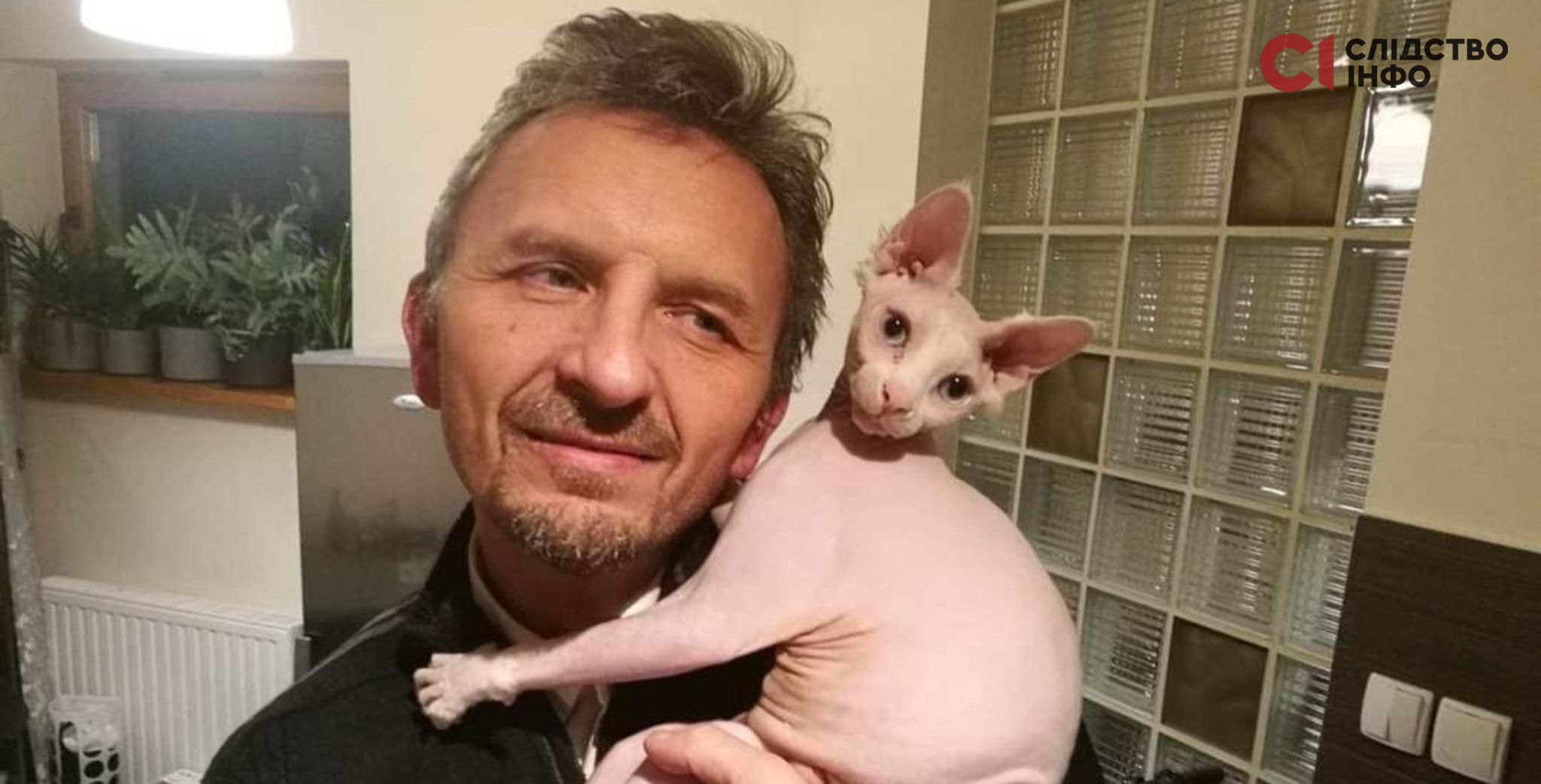
Кшиштов Галос, фото: «Слідство.Інфо»
“According to one of our respondents, in May 2023 a Polish citizen ended up in the Taganrog pre-trial detention center (SIZO). He claimed that he had ‘gone traveling to Ukraine to see what was happening there, but took a wrong turn and drove into a Russian military checkpoint.’ He was regularly beaten for not learning Russian and because Poland helps Ukraine. During a roll call, one of the guard shifts beat him so severely that his legs turned blue and began to fail, and in mid-June 2023 he died. Afterwards, his cellmates were forced to write a statement claiming that none of the staff had beaten him and that there had been no conflicts in the cell.”
This is an excerpt from our report, Ukraine: War Crimes of the Russian Aggressors.
We debated for a long time whether to include this information. It was
the only evidence we had that a Polish man had been in the Taganrog SIZO
in the spring of 2023. At that time, we had no corroboration for the
story. Moreover, the narrative about “taking a wrong turn” seemed quite
implausible.
However, a couple of weeks after the report was published, we were contacted by Wiktoria Bieliaszyn, a journalist from the Polish publication Gazeta Wyborcza. She had read the report carefully (this brief passage appears on page 176 of 256) and became interested in the story of her compatriot. We shared the limited unpublished information we had—our source mentioned that the Pole’s name was “Hristov or Kristof,” and that he was about 50–55 years old. Krzysztof (a form of the same name) is one of the five most common Polish names, so we did not have much hope that the journalist would be able to track him down.
However, a couple of weeks after the report was published, we were contacted by Wiktoria Bieliaszyn, a journalist from the Polish publication Gazeta Wyborcza. She had read the report carefully (this brief passage appears on page 176 of 256) and became interested in the story of her compatriot. We shared the limited unpublished information we had—our source mentioned that the Pole’s name was “Hristov or Kristof,” and that he was about 50–55 years old. Krzysztof (a form of the same name) is one of the five most common Polish names, so we did not have much hope that the journalist would be able to track him down.
But fairly quickly, a certain Krzysztof Galos of the appropriate birth year was found on the list of missing Polish citizens. Wiktoria and her colleagues contacted his relatives. Krzysztof’s son, Paweł, confirmed that his father had gone on a trip in the spring of 2023 and had not returned.
Initially, the family was not worried. Krzysztof loved to travel and frequently drove around Europe, so no one was surprised when he took a two-week vacation, grabbed his tripod, computer, and camera, and set off in an unknown direction. His son was slightly concerned that his father communicated only via messages and did not answer calls, but at first he did not attach much importance to it.
However, in May, three weeks after the messages from Krzysztof stopped, Paweł went to the police to file a missing person report. In August, Krzysztof’s family was shown CCTV footage capturing his car near the Zaporizhzhia nuclear power plant.
“I think he didn’t fully believe in the scale of the war and wanted to see everything with his own eyes,” says Paweł.
However, his relatives only learned that Krzysztof had ended up in
Russian captivity and ultimately died in prison from journalists at Gazeta Wyborcza.
“I understood that my uncle was probably already dead. The Ukrainians assumed he might have been taken prisoner, but it seemed impossible to us that in the 21st century a person completely uninvolved in the conflict could become a POW. What we have managed to find out now—that my uncle was likely tortured and died in agony—is impossible to accept,” Krzysztof’s niece Karolina (name changed at her request) told Gazeta Wyborcza.
“I understood that my uncle was probably already dead. The Ukrainians assumed he might have been taken prisoner, but it seemed impossible to us that in the 21st century a person completely uninvolved in the conflict could become a POW. What we have managed to find out now—that my uncle was likely tortured and died in agony—is impossible to accept,” Krzysztof’s niece Karolina (name changed at her request) told Gazeta Wyborcza.
Ukrainian journalists from Slidstvo.Info reconstructed Krzysztof’s route through Ukraine. According to their information, he crossed the Polish-Ukrainian border on April 14, 2023, through the Krakivets checkpoint. From April 15 to 17 his phone pinged in Odesa, and from April 17 to 18 in Beryslav, Kherson region. He then headed toward the Zaporizhzhia region.
In the Zaporizhzhia direction, the Pole was stopped at a checkpoint by Ukrainian military personnel. Krzysztof told them he was going to see his girlfriend in temporarily occupied Enerhodar. The soldiers did not allow him to proceed further because of the danger. On April 20, 2023, the man went missing. After that, he was only seen in the torture-ridden SIZO-2 in Taganrog.
Slidstvo.Info found several prisoners of war who were in Taganrog at the same time as Krzysztof.
Andriy, a released POW serviceman, says that after the Pole was brought to SIZO No. 2 in Taganrog, Rostov region, a real frenzy broke out among the facility’s staff.
“They laughed and rejoiced that they had caught a Pole. They said, ‘You are next, you shouldn’t relax. You’ve gotten completely insolent over there in your Europe — we will get to you,’” Andriy recalls.
Another former prisoner with the call sign “Britva” (“Razor”) says that the Pole, Krzysztof Galos, was forced to speak Russian—which he did not know—and was beaten for it.
“And they went at him: ‘Lyakh, lyakh, kurva!’ [derogatory slang for a Pole], and it started. They constantly beat him and forced him to learn the anthem of the Russian Federation. The guys there (other prisoners) tried to teach him something,” the man says.
Former prisoner Mykyta Semenov rules out the possibility that Krzysztof was pretending not to know Russian, as the Russian jailers assumed.
“Honestly, when I heard him, I realized he was in no state to make anything up. He was really in bad shape. If he had known Russian, he would have said he was feeling bad. A desperate person grabs at any opportunity to get help, to somehow ease their condition. He didn’t know Russian — that’s for sure,” says Mykyta.
Polish journalists also managed to speak with an exchanged Ukrainian prisoner of war who was in the Taganrog SIZO at the same time as Krzysztof Galos. Borys was held in an adjacent cell. His account aligns with what is known from other sources.
The Pole was in extremely poor condition. He was regularly beaten, and with each passing day he felt worse. Prisoners heard him complaining of severe pain and saying he was afraid he would not survive another beating.
“He would say: ‘I think I’m going to die,’” Borys recalls, based on what other detainees told him.
At some point, the Pole’s condition deteriorated sharply. According to the prisoners, he was not taken out of his cell for a long time despite his pleas for help. And when he was finally taken out, he could practically no longer walk on his own.
“When they carried him out, he was already dying,” says Borys.
Krzysztof Galos’s relatives, the Polish Ministry of Foreign Affairs, and the Polish prosecutor’s office sent inquiries to all possible administrative bodies in Russia to find out his fate. However, predictably, they received no answer.
On August 7, 2025, following the death in captivity of Ukrainian journalist Victoria Roshchyna, Ukrainian authorities issued a notice of suspicion to the head of Taganrog SIZO-2, Alexander Shtoda, under Part 2 of Article 28 and Part 1 of Article 438 of the Criminal Code of Ukraine — cruel treatment of the civilian population committed by a group of persons acting in prior conspiracy.
On November 25, 2025, the EU imposed sanctions against Alexander Shtoda and his deputies, Andrey Mikhalichenko and Andrey Sapitsky, as well as against the head of the Federal Penitentiary Service (FSIN) directorate for the Rostov region, Andrey Polyakov.
Authored by: Natalia Morozova — participant in the mission of Russian human rights defenders in Ukraine, co-chair and lawyer of the Human Rights Defence Center Memorial
Authored by: Natalia Morozova — participant in the mission of Russian human rights defenders in Ukraine, co-chair and lawyer of the Human Rights Defence Center Memorial