This material is available in other languages:
ru
26 Jan 2026
The Cases of Lavrov, Khalimov, and the Council of Teips: The European Court of Human Rights Finds Violations of Russians’ Rights

- Vyacheslav Lukichev
- Council of Teips of the Ingush People
- Murat Daskiev
- Sergey Lavrov
- Aitakhadzhi Khalimov
On 22 January 2026, the European Court of Human Rights (ECtHR) delivered judgments in a number of applications from Russia. The applicants included an anarchist from Arkhangelsk, a left-wing activist from Kursk, elders from Ingushetia, and a labour migrant from Kazakhstan.
Despite the different charges — ranging from “justification of terrorism” to the dissemination of “fake news” — all of the cases share a common feature: Russian courts relied on vague legislative wording to suppress political criticism and peaceful civic activity.
The Human Rights Defence Center Memorial presents the stories of four individuals and one public organization in whose cases the ECtHR found violations of rights.
Vyacheslav Lukichev

photo: newkaliningrad.ru
On 31 October 2018, an explosion occurred at the entrance to the Federal Security Service (FSB) office in the Arkhangelsk Region: 17-year-old Mikhail Zhlobitsky carried out a suicide bombing in protest against the torture of anarchists. That same evening, a post about the incident appeared on the Telegram channel Prometheus, created by 24-year-old anarchist Vyacheslav Lukichev. In the post, the deceased was described as a “hero,” while the author also reflected on the existence of other, non-violent methods of political struggle.
On 4 November 2018, Lukichev was detained. During a lengthy interrogation, he was deprived of sleep and food and threatened with the prosecution of his acquaintances. As a result, Lukichev signed a confession. He acknowledged reposting a text from another messenger but insisted that he had not expressed unconditional support for terrorism. Before trial, he spent four months in pre-trial detention.
Lukichev was found guilty of “justifying terrorism on the internet” (Article 205.2 §2 of the Criminal Code). On 14 March 2019, the Moscow District Military Court sentenced him to a fine of 500,000 roubles (reduced to 300,000 roubles taking into account the time spent in detention). He was released in the courtroom.
The Court found violations of the following provisions of the European Convention on Human Rights:
- Article 10 (freedom of expression) — due to unjustified criminal prosecution for a political comment;
- Article 5 (right to liberty and security) — due to excessively lengthy pre-trial detention.
The ECtHR awarded Vyacheslav Lukichev €7,500 in compensation.
Council of Teips of the Ingush People
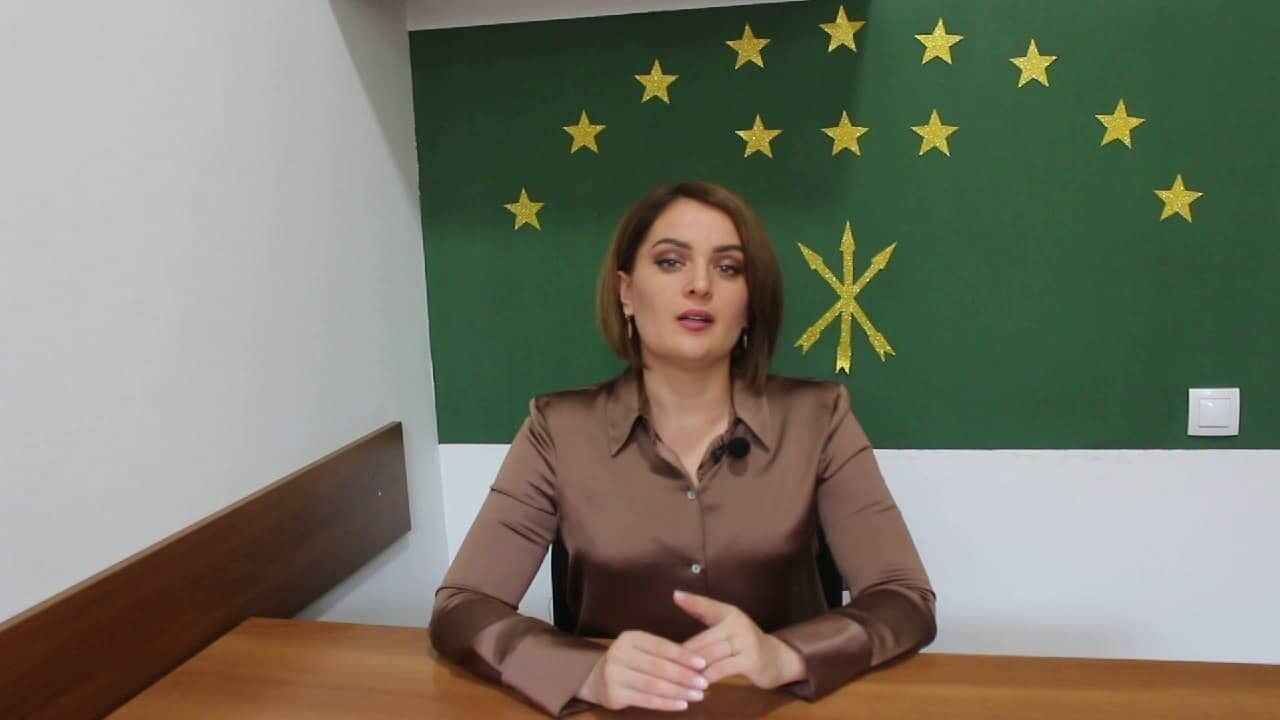
In 2018, mass protests began in Ingushetia against an agreement on a new administrative border with Chechnya. One of the centres of opposition was the Council of Teips of the Ingush People, a movement created in 2016 as an alternative to the pro-government council under the head of the republic. The organization actively criticized the transfer of land, calling the agreement “anti-people,” and demanded the restoration of direct elections for the head of the region.

photo: Yelena Afonina/TASS
In March 2019, members of the Council took part in a large-scale rally in Magas, which ended in clashes with law enforcement.
After that, pressure on the movement’s leaders intensified. In April 2019, the chairman of the Council, Malsag Uzhakhov, was arrested and accused of organizing violence at the rally and of creating an NGO that allegedly “encouraged citizens to refuse to fulfil their duties.” He was later sentenced to nine years’ imprisonment in what became known as the “Ingush case”.

Malsag Uzhakhov
At the same time, the Ministry of Justice initiated proceedings to liquidate the Council, accusing it of interfering with the activities of the authorities (due to appeals to deputies) and of publishing “state secrets” (the nature of which was never specified).
On 27 March 2020, the Supreme Court of Ingushetia ordered the liquidation of the Council of Teips. The defence and the Human Rights Defence Center Memorial argued that the real reason for the dissolution was political persecution for criticism of the authorities, while the Ministry of Justice’s formal claims were merely a pretext to eliminate an influential organization. In 2021, the Supreme Court of the Russian Federation upheld this decision.
The ECtHR found the liquidation of the organization to be unlawful. The Court concluded that Russian courts had applied an excessively broad interpretation of extremism legislation and had failed to assess the proportionality of the sanction. It also established that the authorities had persecuted the organization for the lawful expression of political opinion in the absence of any real evidence of incitement to violence.
The Court found violations of:
- Article 11 (freedom of association) — due to the forced dissolution of the organization;
- Article 10 (freedom of expression) — due to persecution for political criticism.
The ECtHR awarded the Council of Teips of the Ingush People €7,500 in compensation.
Murat Daskiev

On 8 May 2019, a video address to deputies was published on the website and YouTube channel of the Council of Teips of the Ingush People. The acting chairman of the Council, 70-year-old Murat Daskiev, read a text stating that the organization had “reliable information” that federal authorities were demanding that the leadership of Ingushetia swiftly complete the transfer of part of the ancestral lands (the Prigorodny District) to North Ossetia. The address expressed concern that this would pave the way for the liquidation of the republic and the “disappearance of the Ingush people.”
Soon afterwards, Daskiev was summoned to the Centre for Combating Extremism (“Centre E”) and then to a police station, where a protocol was drawn up accusing him of disseminating “fake news.” In court, the defence attempted to prove the reliability of the information, referring to an instruction from Rosreestr to accelerate the “alignment of borders” and to public statements by the then head of the republic, Yunus-Bek Yevkurov. Lawyer Basir Ozdoev emphasized that the video constituted political opinion and a call for discussion rather than a set of factual assertions. The court, however, rejected all motions to summon witnesses from the Cadastral Chamber.
Daskiev was found guilty of “disseminating knowingly false socially significant information” (Article 13.15 §9 of the Code of Administrative Offences). On 29 July 2019, a justice of the peace fined him 15,000 roubles, finding that the address had created a threat of mass public disorder. In September 2019, the Magas District Court upheld the decision.
The ECtHR found violations of:
- Article 10 (freedom of expression) — due to the fine imposed for value judgments and participation in political debate;
- Article 6 (right to a fair trial) — due to the absence of a prosecuting party, whose role was effectively assumed by the judge.
The Court awarded Murat Daskiev €7,500 in compensation.
Sergey Lavrov

From June 2019, 27-year-old activist from Kursk Sergey Lavrov was subjected to pressure from law enforcement because of his activity on social media. The basis for criminal prosecution consisted of seven posts on VKontakte in which he discussed the need for a “people’s revolution” to restore the USSR and create a “people’s state.” Despite the fact that Lavrov explicitly called for action “without weapons, within the framework of the Constitution and international law,” investigators claimed to find in his words “psychological indicators of calls for the violent seizure of power.”
Particular attention was paid to his repost of a humorous poll about the possibility of a military coup in Russia, accompanied by a collage featuring Vladimir Putin. Lavrov insisted that his aim was exclusively peaceful political activity and that he used the term “revolution” to mean a non-violent change of regime through mass protests and popular assemblies. Before sentencing, he spent nearly a year under house arrest and was twice sent for compulsory psychiatric examinations, including at the Serbsky Institute.
On 29 May 2020, the Second Western District Military Court found Lavrov guilty of “public calls for terrorist activity” (Article 205.2 §2 of the Criminal Code). He was sentenced to five years’ imprisonment in a general-regime colony and to compulsory outpatient psychiatric treatment at the place of detention. He was also banned from administering websites and online communities for two and a half years. In September 2020, the appeal court upheld the sentence.
Lavrov served his full term and was released in November 2024.
The ECtHR found that Sergey Lavrov’s right to freedom of expression had been violated (Article 10 of the Convention). The Court pointed to the excessively broad interpretation of anti-terrorism legislation, whereby political criticism of the head of state and calls for peaceful change of power were equated with terrorism in the complete absence of evidence of incitement to violence.
The Court awarded Sergey Lavrov €7,500 in compensation.
Aitakhadzhi Khalimov

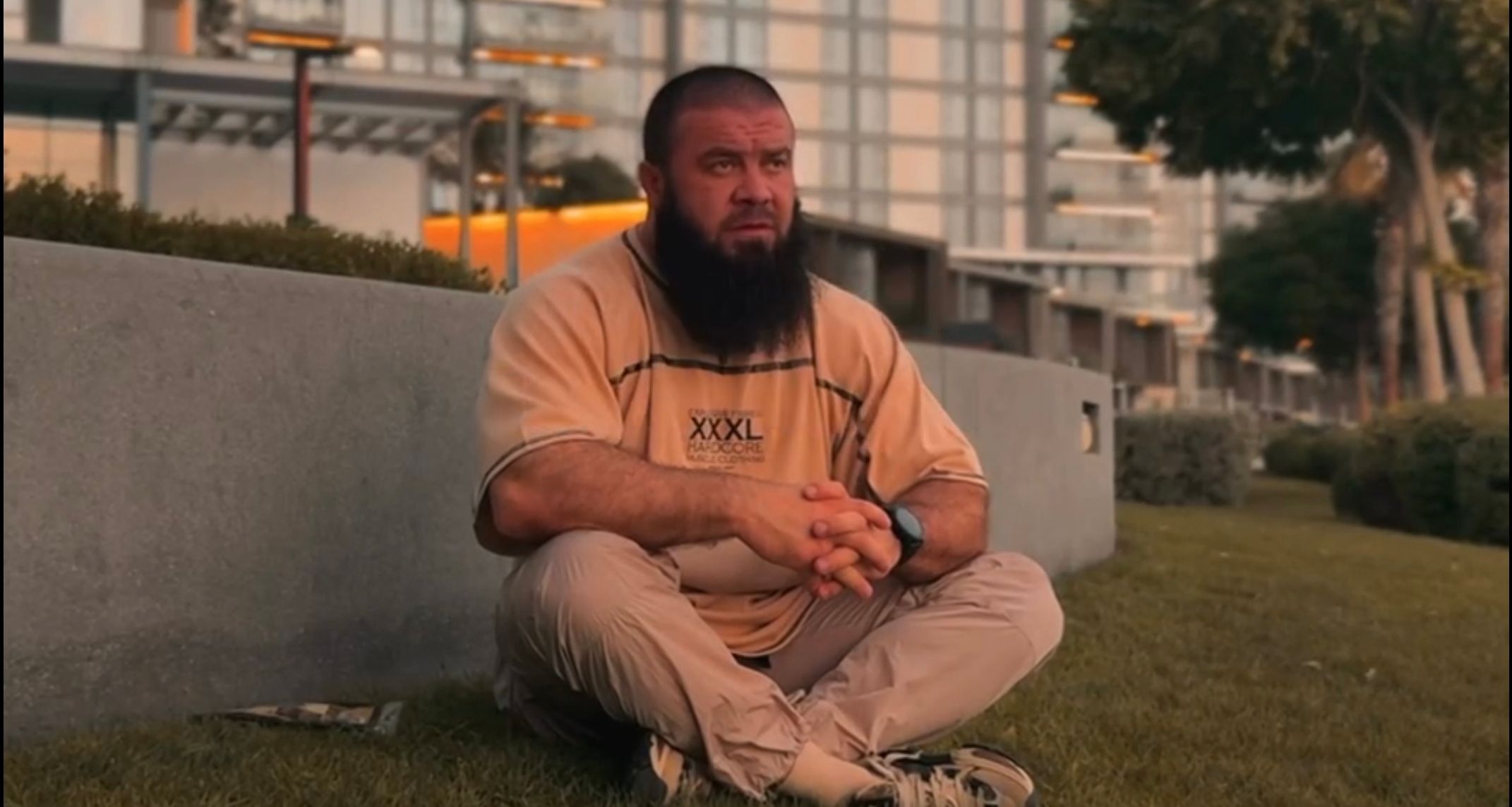
In October 2019, 26-year-old ethnic Chechen and citizen of Kazakhstan Aitakhadzhi Khalimov came to Kaliningrad for work. Two months later, he was detained by FSB officers. The basis for the charges were three videos about the First Chechen War that Khalimov had saved in the video section of his VKontakte page. The videos consisted of documentary footage from the 1990s, including BBC reports, and had been freely available long before he saved them.
The investigation accused Khalimov of “justifying terrorism,” claiming that footage of destroyed houses and praying fighters promoted separatist ideas. Khalimov pleaded not guilty, insisting that he had saved the videos solely out of interest in the history of the war in his homeland and had not commented on them in any way. Human rights defenders described the case as fabricated, pointing to the fictitious nature of the witnesses — two servicemen who allegedly came across Khalimov’s page in recommendations just one week after the videos were published.
On 10 June 2020, the Second Western District Military Court sentenced Khalimov to three and a half years’ imprisonment in a general-regime colony. The court’s decision was unaffected by the absence of any direct calls for violence in the videos, Khalimov’s serious illness (kidney failure), or the birth of his son six days before the verdict — his wife came to the hearing directly from the maternity hospital.
The ECtHR found that the authorities had violated Khalimov’s right to freedom of expression (Article 10 of the Convention). The Court concluded that the Russian authorities had applied an excessively broad interpretation of anti-terrorism legislation to historical and political content in the absence of evidence of incitement to violence.
The ECtHR awarded Aitakhadzhi Khalimov €7,500 in compensation.